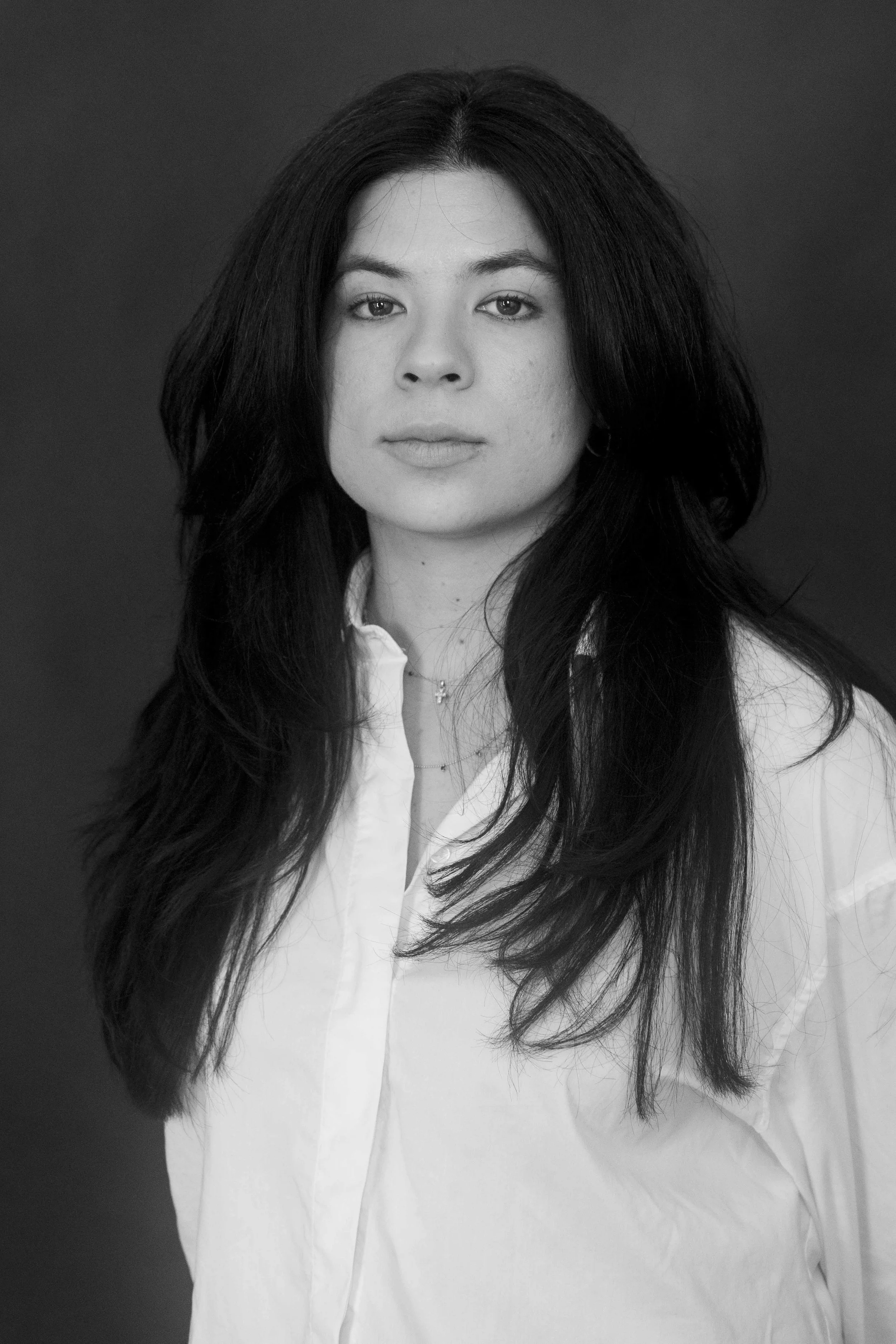
Isabella Grullón de Sarmiento is a Colombian and Dominican fiction writer living in Queens, New York. She is completing her MFA at Columbia University and is a Kathleen Bakeless Scholar in fiction at the 2026 Bread Loaf Writers' Conference.
She previously spent five years at The New York Times, where she covered Democratic and Latino voters on the 2018 and 2020 election teams and reported for the paper's breaking news desk. She published there as Isabella Grullón Paz.
Featured Clips
*
Featured Clips *
Contribution to Where We Are is a visual column in The New York Times “about young people coming of age and the spaces where they create community.” Photography by Juan Brenner.
This is a Q&A with Nazy Nazhand, an Iranian curator who has brought many Iranian artists to the forefront of the the art world. We spoke about how art is both a reflection and vehicle for struggle among the Iranian diaspora.
For this story I spoke to leaders from the Yaqui Nation, an Indigenous group in Mexico and the United States, who worked tirelessly for decades to repatriate religious and cultural artifacts found in a Swedish museum back to the tribes with the help of the United Nations.
A in this story, I explored how the glut of fast fashion has made its way into local thrift stores, making it hard for women who have been purchasing secondhand for decades to find quality garments they can wear. I spoke to women who have been thrifting for decades to get a sense of wether or not the quality of thrifted items has declined in recent years and it turns out it did.
A California elementary school put together a hotline where people could call to get a pep-talk from a kindergartener. Well, listen to a motivational message from a kindergartener.
This is near and dear to my heart. Got to explore the tradition of burning old rag-dolls to banish the old year and bring in the new.
It was really important to me when covering this story that I got at the decades of work it took to get these honorary degrees for Nisei students. Since 2007, Jonathan Kaji, the former president of the Asian Pacific Alumni Association at the University of California had been pushing the school to apologize for the treatment of Nisei students. In 2021, they listened.
After being cited for a rip in her jeans on the first day of school, Sophia Trevino has led a protest seeking changes to the district’s dress code, which she says unfairly targets girls, people of color and lower income students.
After a police department claimed that one of their officers suffered from a fentanyl overdose after handling a white powder, I spoke to medical experts to figure out if that was even possible. It’s not.
This is an example of the weekly roundups I would do for the international Covid-19 live briefing, which ran 24/7 during the hight of the pandemic.
I was a part of a small group of reporters who gathered the voting information of each state to compile a guide for our readers. You’d be surprised at how many states don’t have readily accessible voting instructions, especially in a a year where vote by mail was so confusing during the pandemic. I’m really proud of this one.
An interview with Charles Booker when he lost his race for senate in Kentucky.
At no point have black trans people shared fully in the gains of the L.G.B.T.Q. or racial justice movements. This may be changing.
Elections are rarely level playing fields for candidates coming from working class backgrounds, the pandemic exacerbated the differences. Some candidates left their jobs to run for office, also leaving behind healthcare. Add to that the rising costs of campaigns, meaning that some candidates could not afford to put money aside for healthcare to be competitive in their districts.
Care in Action, the advocacy branch of the National Domestic Workers Alliance, hosted a presidential forum in Las Vegas in February 2020 during the Nevada Caucuses. I traveled to the forum to hear candidates speak and ask them questions about their platform.
This project was one of my first long haul pieces for the Times. I interviewed all the Latine outreach directors of the Democratic campaigns to get a better sense of who they were and what motivated their outreach.
In the wake of Katie Hill’s impeachment for being in a relationship with a staffer, another ethical violation was being debated outside of Washington — the fact that her partner leaked private photos of Hill. This raised the fear among young women candidates about yet another thing they’d have to worry about when running for office, anything they post on social media, or even send as a text, could be used against them.
This is the first feature I got to travel for the Times. I went to speak to a group of Democratic Socialists during the Democratic debate in Ohio. The spoke about how they felt abandoned by the Democratic Party, and that not many candidates had platforms that could address their needs.
A link to my New York Times author page. Here you will find a full compilation of my five years of work for the Times including my breaking news stories, contributions to Race/Related, my COVID-19 work and my political reporting.